
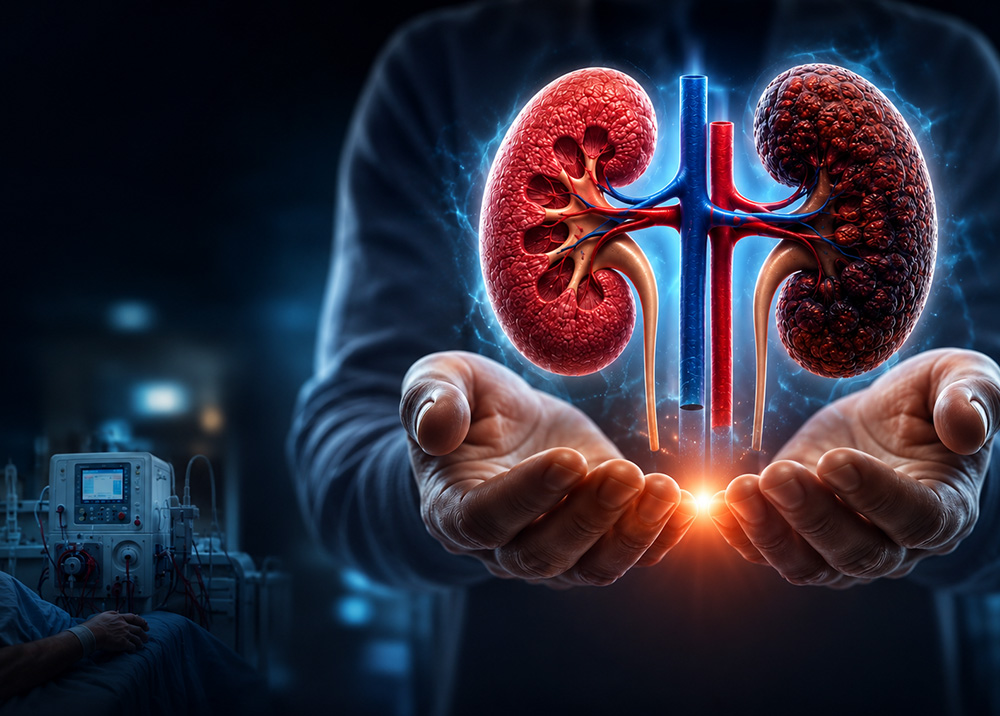
India is currently facing a silent healthcare crisis. Approximately 138 million adults across the country are living with Chronic Kidney Disease (CKD), making India the country with the second-highest CKD burden globally. This rapid rise is heavily fueled by shifting metabolic lifestyles, primarily rising rates of diabetes and hypertension.
Here in Tamil Nadu, the situation has a unique footprint. The prevalence of CKD affects roughly 8.7% to 9.5% of our adult population. Of major public health concern is a high rate of CKD of Unknown Etiology (CKDu), a specific type of kidney disease that lacks traditional triggers like diabetes, accounting for nearly half of all state cases and disproportionately impacting rural agricultural workers.
Dr. R. Saravanan, leading Consultant Nephrologist in Madurai, notes that despite the high prevalence of CKD in Tamil Nadu, mortality and Disability-Adjusted Life Years (DALY) rates are among the lowest because of early screening which enables effective management. In this blog, we delve into symptoms, risk factors, causes, and how to prevent chronic kidney disease to empower you with the knowledge to seek early intervention and protect long-term organ health.
What is Chronic Kidney Disease (CKD)?
Chronic Kidney Disease is the gradual, progressive loss of kidney function over a period of months or years. Your kidneys act as your body’s sophisticated filtration system, clearing waste products and excess fluids from your blood, which are then excreted through urine.
When you have CKD, the kidneys become progressively damaged and lose their capacity to filter these toxins efficiently. Because the kidneys have a massive internal reserve, function can drop significantly before you ever feel sick. If left unchecked, waste builds up to dangerous levels in the blood, eventually progressing to end-stage renal failure.
Why is CKD on the Rise? The Major Causes
The sharp increase in kidney disease cases is directly tied to how our metabolic health has changed over recent decades. The primary CKD causes include:
Diabetes: Diabetes is the leading cause of kidney failure. Chronically high blood sugar levels physically damage the millions of microscopic filtering units (nephrons) inside the kidney over time.
Hypertension: High blood pressure forces blood through the kidney’s delicate blood vessels with too much intensity, causing them to scar, narrow, and weaken.
The Rural CKDu Factor: In Tamil Nadu’s agricultural belts, heavy physical labor, chronic dehydration in hot climates, and potential exposure to groundwater toxins or agricultural chemicals contribute to CKDu (Unknown Cause), hitting individuals without regular metabolic risks.
Over-the-Counter Medication Abuse: Painkillers, specifically Non-Steroidal Anti-Inflammatory Drugs (NSAIDs) like ibuprofen or diclofenac, are highly toxic to the kidneys when taken frequently without medical supervision.
Chronic Kidney Disease Symptoms: Why It’s Called a Silent Killer
In its initial stages (Stages 1 to 3), CKD rarely presents obvious warning signs. A person can lose up to 50% of their kidney function while feeling completely normal. As the disease advances to deeper stages, the following chronic kidney disease symptoms begins to appear:
- Swelling (edema) in the feet, ankles, hands, or around the eyes due to fluid retention.
- Changes in urination:
- Getting up frequently at night
- More or less urination than normal
- Urine appearing unusually foamy or bubbly
- Persistent, unexplained fatigue, weakness, or brain fog caused by a buildup of toxins or anemia.
- Loss of appetite, nausea, or a persistent metallic taste in the mouth.
- Uncontrolled high blood pressure that suddenly becomes difficult to manage with standard medications.

“Diabetes and high blood pressure are the silent engines behind kidney damage. Your kidneys can lose half their function before you ever feel sick. To effectively protect your kidneys, you need early, proactive screening even before you notice symptoms.”
Who is At Risk of Chronic Kidney Disease?
You should proactively have your kidney function evaluated if you fall into any of these high-risk categories:
- Diagnosed with Type 1 or Type 2 Diabetes.
- Have chronic or poorly controlled High Blood Pressure.
- Have a family history of kidney failure or hereditary conditions like Polycystic Kidney Disease (PKD).
- Are over the age of 60.
- Work in high-heat outdoor environments with a history of recurrent dehydration.
How to Prevent Chronic Kidney Disease?
While existing structural kidney scarring cannot be reversed, its onset can absolutely be prevented, and its progression can be drastically slowed down if caught early.
- Keep Your Metabolic Health Stable: Maintain tight control over your HbA1c (blood sugar) and blood pressure. Keeping blood pressure below 130/80 mmHg is a standard target for protecting renal tissue.
- Hydrate Smarter, Not Just More: Drink adequate water throughout the day, especially if you work outdoors under the sun, to avoid acute dehydration cycles that stress the kidneys.
- Ditch the Self-Medication habit: Avoid popping over-the-counter pain medications for routine headaches or body aches. Always consult a physician for safer alternatives.
- Adopt a Low-Sodium Diet: High salt intake increases blood pressure and places a heavy burden on renal filtration.
How is CKD Diagnosed?
The diagnosis of CKD does not require invasive tests; it relies on two simple, inexpensive screening tests:
Estimated Glomerular Filtration Rate (eGFR)
A routine blood test measures your serum creatinine levels to calculate exactly how efficiently your kidneys are filtering waste based on your age and gender.
Urine Albumin-to-Creatinine Ratio (UACR)
A simple urine test checks for the presence of albumin (a type of protein). Healthy kidneys do not let protein leak into urine; finding it is one of the earliest indicators of kidney distress.
Dr. Saravanan’s Approach to CKD Treatment in Madurai
Dr. R. Saravanan, a trusted kidney specialist in Madurai, prioritizes precision preventive nephrology. He uses a stage-specific, evidence-based approach focused on halting kidney decline and preventing complications through targeted medical interventions:
- Root-Cause Control: Prescribing kidney-protective medications (like ACE inhibitors or ARBs) to lower blood pressure, reduce urine protein leakage, and stabilize blood sugar.
- Complication Management: Utilizing targeted therapies to treat anemia (iron/ESA therapy), correct fluid retention (diuretics), and protect bone health (phosphate binders).
- Medical Nutrition Therapy: Tailoring specific dietary limits on sodium, potassium, phosphorus, and protein to drastically reduce the workload on the kidneys.
- Advanced Renal & Transplant Care: Providing comprehensive dialysis management (hemodialysis/peritoneal) and end-to-end clinical guidance for kidney transplant evaluations and post-operative care.
Visit SN Kidney Care, Puthur, Madurai
Consult Dr. R. Saravanan, one of the most trusted nephrologists in Madurai for chronic kidney disease, for a thorough evaluation, proactive risk profiling, and long-term protection of your renal health.
If you have diabetes, high blood pressure, or a family history of kidney issues, do not wait for symptoms to appear.
Book Appointment Now: +91 93634 44160/ +91 90039 83839
Address: No. 8, Aishwarya Complex, Iyer Bungalow Road, Mundrumavadi, Puthur, Madurai, Tamil Nadu 625007
Email: snmedicalcentrekidney@gmail.com
Hospital Affiliation: Apollo Hospitals, KK Nagar, Madurai
Serving Patients At: Puthur, Surya Nagar, Thiruppalai, Mattuthavani, and nearby areas