
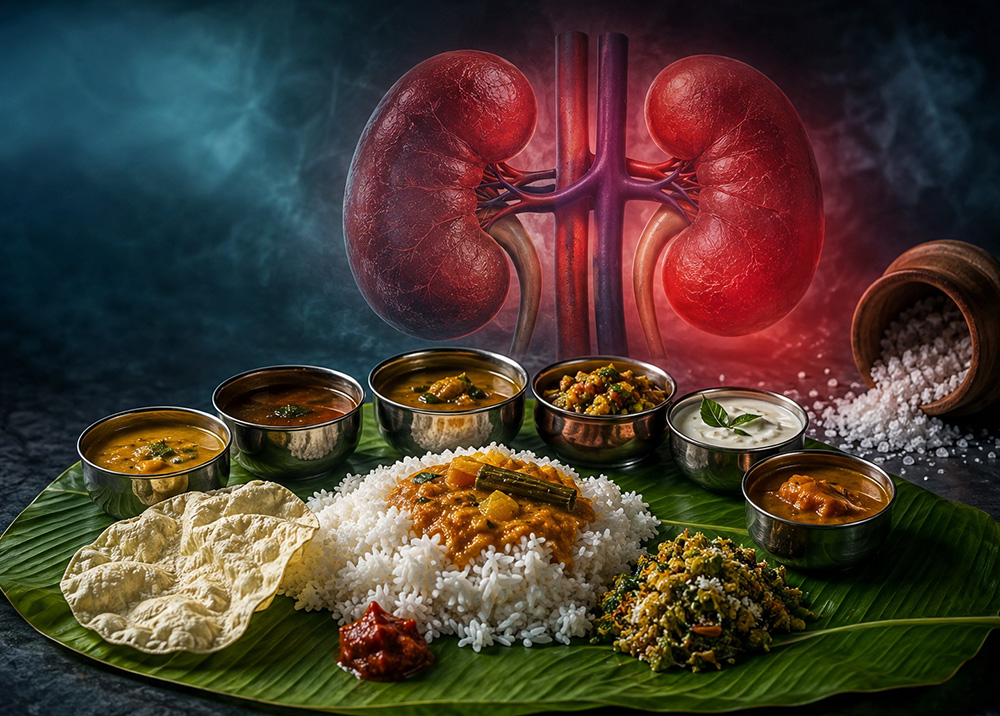
The food you eat has a very direct impact on how hard your vital organs have to work. Tamil culinary heritage is celebrated for its rich flavors, medicinal spices, and fermented foods. But let’s be honest: our modern plates look very different from what our grandparents ate. Today, a heavy reliance on polished white rice, hidden sodium traps, and instant spice mixes is quietly pushing our kidneys to their absolute limits.
Dr. R. Saravanan, a trusted Consultant Nephrologist in Madurai, notes that understanding how diet affects kidney health is crucial to protect the body’s filtration system in the long run. In this actionable guide, we help you understand what a kidney-friendly diet looks like without compromising on our Tamil staples or rich culinary heritage.
The Hidden Risks: Foods That Are Bad for Your Kidneys
Many beloved staples in a standard Tamil household can inadvertently turn into foods that are bad for your kidneys if eaten without moderation, especially if you already deal with diabetes or high blood pressure.
1. The Salt Burden: Oorugai, Appalam, and Karuvadu
Excess salt, a primary driver of hypertension, forces blood through and physically scars kidney blood vessels. In typical Tamil cuisine, salt is heavily concentrated in daily staples:
- Pickles & Appalams: These are essentially preserved in pure sodium. A single meal with both can push you past your entire daily salt limit.
- Dry Salted Fish (Karuvadu): This traditional favourite is packed with extreme salt concentrations.
- Instant Mixes: Commercially bought instant Sambar and Spice mixes are loaded with extra salt to boost shelf life.
2. Overdose of Polished White Rice
The shift from traditional millets and hand-pounded rice to highly polished white rice as the centrepiece of every meal means our bodies are flooded with simple carbohydrates. This causes rapid blood sugar spikes, driving the onset of Type 2 Diabetes. Diabetic nephropathy (kidney damage caused by diabetes) remains the leading cause of total kidney failure in Madurai.
3. The Potassium Trap in Advanced Cases
For individuals with healthy kidneys, potassium-rich foods are excellent for managing blood pressure. However, if your kidney function is already compromised, your body cannot flush out excess potassium, leading to a dangerous buildup in the blood (hyperkalemia). Traditional staples high in potassium include:
- Vegetables & Fruits: Bananas, drumsticks (Murungakkai), spinach (Keerai), potatoes, and tomatoes.
- Coconut Water (Elaneer): While refreshing in the summer, it can be highly dangerous for an advanced kidney patient due to its dense potassium content.

“Your kidneys work tirelessly behind the scenes. A heavy reliance on high-sodium foods and highly refined carbohydrates is overburdening our kidneys. Transitioning to a safe, balanced Tamil diet for kidney health is critical to protect long-term renal function before structural damage sets in.”
Transitioning to a Healthy Tamil Diet for Kidney Health
Protecting your organs doesn’t mean giving up your cultural palate. It means adjusting your ingredients and cooking methods to build a diet for healthy kidneys.
Swap Polished White Rice: Reintroduce traditional, unpolished low-glycemic grains like Kudravali (Barnyard millet), Varagu (Kodo millet), or hand-pounded rice in moderation to keep blood sugars completely stable.
Optimize Your Salt Intake: Limit the use of crystal salt (Kal Uppu) in daily cooking. Take appalams, pickles, and processed instant mixes in moderation. Use natural flavour enhancers like lemon juice, tamarind (Puli), or fresh coriander to season food instead of adding extra salt.
Modify Vegetable Preparation (Leaching): If you are an advanced kidney patient tracking your potassium, you can reduce the potassium content in vegetables like potatoes or raw bananas by cutting them into small pieces and boiling them in excess water, then discarding the water before final cooking.
Emphasize Lean, Controlled Proteins: If you consume non-vegetarian food, prioritize fresh, home-cooked fish or skinless chicken in controlled portions rather than heavy, oil-laden red meat curries.
Designing a Personalized, Kidney-Friendly Diet
There is no single ‘one-size-fits-all’ diet plan for renal health. A truly effective Tamil diet for kidney health must change based on the health of the individual:
- Preventive Stage: For individuals with early-stage diabetes or hypertension, the diet focuses strictly on aggressive blood sugar control and low sodium intake to prevent the onset of kidney damage.
- Advanced Managed Stage (Pre-Dialysis): For individuals with existing CKD (Stages 3 or 4), a kidney-friendly diet must be strictly modified to limit protein, potassium, and phosphorus intake to minimize the workload on the remaining nephrons.
Visit SN Kidney Care, Puthur, Madurai
Consult Dr. R. Saravanan, trusted kidney specialist in Madurai, for a personalized approach to your dietary and renal health. Modifying your diet doesn’t mean giving up the foods you love; it requires expert, structured guidance tailored to your body’s specific medical needs.
Book Appointment Now: +91 93634 44160/ +91 90039 83839
Address: No. 8, Aishwarya Complex, Iyer Bungalow Road, Mundrumavadi, Puthur, Madurai, Tamil Nadu – 625007
Email: snmedicalcentrekidney@gmail.com
Hospital Affiliation: Apollo Hospitals, KK Nagar, Madurai.
Serving Patients At: Puthur, Surya Nagar, Thiruppalai, Mattuthavani, and nearby areas